
UDL in K-12 CS Education Microcredential
Advanced stragies for Universal Design for learning in K-12 CS education
About our approach
How do you teach computer science when your students have vastly different needs? While our K-12 CS for Learners with Disabilities microcredential provided the foundation, this microcredential invites you to dive deeper. We move beyond general accessibility to explore the intersection of the three UDL Principles and computation thinking (CT), ensuring that CS for everyone is a classroom reality, not just a slogan.
Many teachers feel overwhelmed by the range of needs in their classrooms and the lack of specific support for CS education. You might know general UDL strategies for core subjects, but applying them to debugging, algorithmic thinking, or syntax can feel like uncharted territory.
Our course bridges that gap. We teach you how to build a proactive, sustainable, and accessible computer science curriculum that works for your specific students
By the end of this course, you will move from simply accommodating students to empowering them. You will learn to design flexible assessments where students can demonstrate their computational thinking in the way that works best for them—whether through block-based coding, text-based languages, verbal explanations, or physical “unplugged” demonstrations.
Microcredential Overview
This second microcredential course in the track move beyond general theory to provide a hands-on laboratory for applying Universal Design for Learning (UDL) to the unique challenges in your computer science classroom. The course and activities prepare educators, administrators, and instructional coaches to:
- Dive deep into the three principles of UDL and how they relate to CS education.
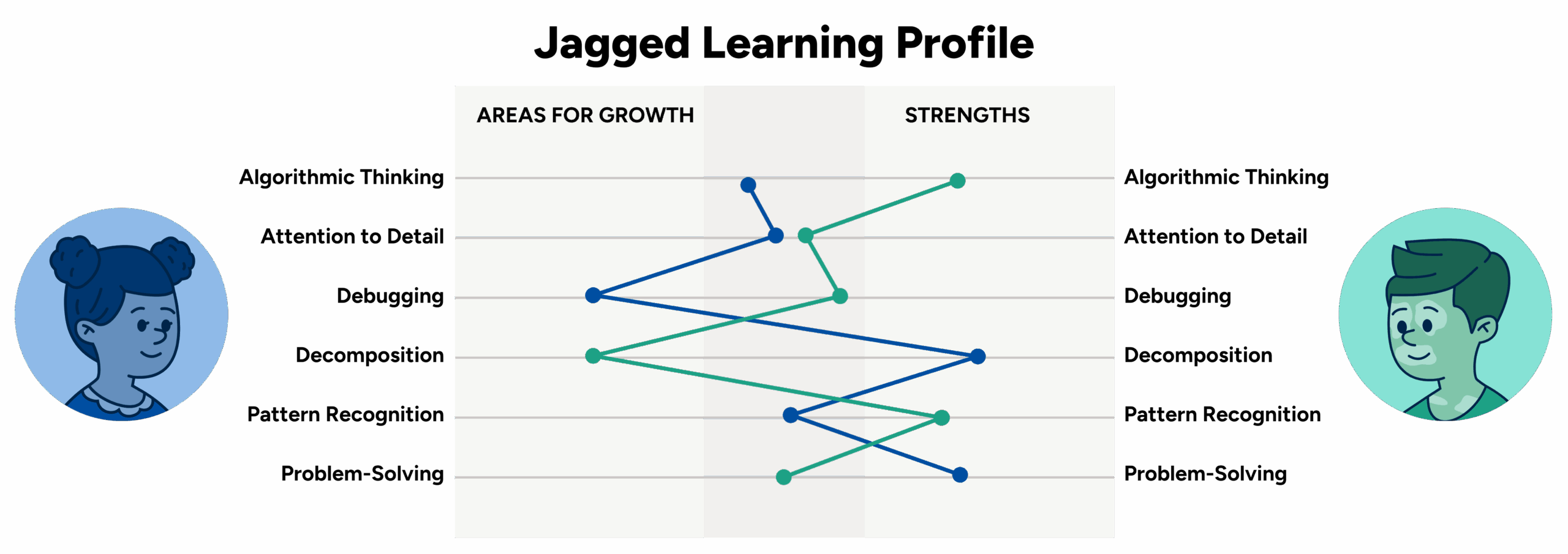
- Identify the hidden barriers in the environment and rebuild a flexible classroom experience where every student drives their own computational thinking in practice.
- Empower participants to design proactive solutions to reach the widest range of learners, including students with disabilities.
How to enroll
Prerequisite: Participants must complete the K-12 CS Learners for Disabilities course before enrolling.
Ready to get started? Enroll in the microcredential now!
Program Interest Form
Fill out this program interest form to receive updates and be contacted with more information about our programming.
Benefits
- Earn 20 in-service hours/2.0 CEUs
- Eligible to apply in-service points towards Florida Educator Certificate renewal requirements in teaching students with disabilities
- Earn a Credly Badge of completion to verify digital credentialing
Eligible Participants
The courses in the K-12 CS for Learners with Disabilities track are for everyone. Whether you are an experienced special education teacher or new to supporting learners with disabilities, this course provides you with the tools to reach the widest range of learners in CS classrooms. We recommend this microcredential for the following types of participants:
- General Education Teachers
- Computer Science Teachers
- Special Education Teachers
- Paraprofessionals / Paraeducators
- Preservice Teachers
- Administrators (school and district level)
Time commitment
- Asynchronous and online with a 4-week completion window
- Approximately 20 hours total time commitment
Tuition & Scholarships
- Course tuition: $60 per person
- Scholarships available! Fill out the Program Interest Form for more information on scholarship availability.
Thanks to the generous support of Google.org, we’re able to offer a limited number of full scholarships for teachers and districts.
Course Schedule
Prerequisite: Participants must complete the K-12 CS Learners for Disabilities course before enrolling.
| Term | Registration Close Date | Course Start Date | Term Duration |
|---|---|---|---|
| Spring 2026 | 4/22/26 | 4/28/26 | 4/28/26 – 5/26/26 |
Ready to get started? Enroll in the microcredential now!
Learn how to implement UDL in your classroom!
This course translates high-level theory into Monday-ready class strategies.
Participants Learn and Practice:
Lesson Deconstruction
Locate where “hidden barriers” were hiding in existing instruction.
Strategic Design
Utilize specialized lesson plan templates connected to UDL guidelines to restructure your curriculum.
CS Pedagogies
Experiment with debugging, TIPP & SEE, multiple entry points and more.
Interactive Simulation
Navigate interactive modules that model UDL principles in action to experience accessible design firsthand.
Teachers Finish With:
Diagnostic Skills
Feel confident in identifying the mindsets and physical barriers that prevent students from participating in CS classrooms.
Resource Bank
Approaches that reflect the principles of UDL, including a set of “unplugged” logic activities, a visual vocabulary bank for syntax, and a choice board for final projects.
Selection Guide
Choose assistive and/or accessible technologies that are specifically suited to the coding platforms and hardware used in their classroom.
Strategies for Agency
New methods to frame projects that promote learner agency, allowing students to choose how they demonstrate mastery.
Backed by Research, Built for Classrooms
Our curriculum was developed by University of Florida researchers to help you implement UDL in your classroom and refined by real-world teacher feedback.
Deep Experience
Our team is made up of former K-12 CS and special education teachers with years of UDL and accessibility experience.
Standards-Based
Every course is aligned with the Computer Science Teachers Association (CSTA) K–12 Computer Science Standards and the UDL +CS/CT Guidelines developed by the CS Everyone Center.
Evidence-Driven
We rely on proven research, not guesswork, to ensure our methods make it easier for you to implement UDL in your classroom and support students.
